
Telling the Story: Mark Cuban on How Pittsburgh Leads the Nation in AI Innovation
From Draft Week to National Spotlight
During NFL Draft Week, Pittsburgh didn’t just host athletes and sports leaders—it made a statement.
At Powering the Future of Sport: A Draft Week Showcase, leaders across AI, sports, business, and government came together at Carnegie Mellon University’s Robotics Innovation Center to highlight what makes Pittsburgh different: not just ideas, but execution at scale. Anchored by Mark Cuban—and featuring leaders including NFL Commissioner Roger Goodell, Governor Josh Shapiro, and Mayor Corey O’Connor—the event positioned Pittsburgh as a city not just participating in AI innovation, but leading it.
To hear that story directly, watch the full conversation between AI Strike Team CEO Joanna Doven and Mark Cuban.
Why Pittsburgh — In Mark Cuban’s Words
Cuban’s message was clear: Pittsburgh has the infrastructure, talent, and real-world environment to lead the next era of AI.
That leadership is already taking shape.
From physical AI breakthroughs to sports-driven deployment, Pittsburgh operates as a real-world proving ground—a place where innovation is tested, refined, and scaled. As outlined throughout the event and explored further below, the city’s advantage comes from its ability to integrate technology directly into live environments.
That advantage isn’t theoretical—it shows up in how Pittsburgh applies AI in real, high-stakes environments.
Nowhere is that more visible than in the world of sports.
Film Study becomes Physical Study
Imagine this: the six-time Super Bowl champion Pittsburgh Steelers are gearing up for yet another appearance in the big game next season. But this time feels different. Across the field won’t be just any NFC opponent—it will be their cross-state rivals, the Philadelphia Eagles.
At 42 years old, veteran Steelers quarterback Aaron Rodgers is meticulous in his preparation, constantly searching for any and every competitive edge. That’s especially true when facing young, world-class defenders like the Eagles Jalen Carter and Jordan Davis. From his famously deceptive hard snap count to the cutting-edge tools he incorporates into practice, Rodgers is always looking to stay one step ahead.
Fortunately for him, he plays in Pittsburgh—a global hub for physical AI and innovation.
Pittsburgh-based Skild AI recognizes the value of that edge. The company has the highest evaluation, $14B, of any AI company outside of Silicon Valley. They also have the ability to develop technology that allows physical robots to study game film of players like Carter and Davis, replicating their blitz paths to simulate real-game pressure in practice. While still theoretical, this kind of innovation represents the future of preparation at the highest level.
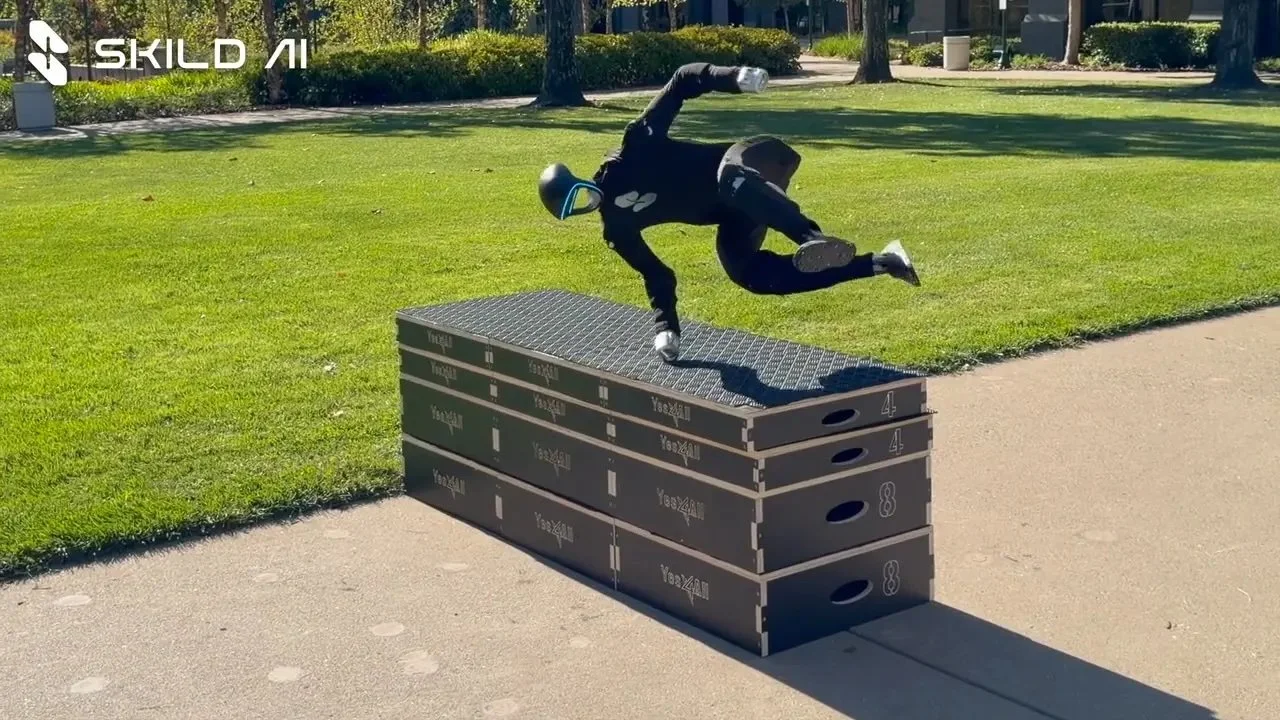
Demo of Skild AI Robotics.
That same spirit of innovation is embedded across the city. Pittsburgh-based companies are redefining how athletes train, complementing and enhancing the tools already used across the National Football League.
And it’s not just football.
Right now, Diamond Kinetics—led by University of Pittsburgh inventors—is transforming how baseball players develop their swing, from Little Leaguers to professionals in Major League Baseball. Their sensor-equipped bats and training apps capture detailed swing data and deliver real-time feedback, helping athletes refine performance with unprecedented precision—all from right here in Pittsburgh.
But these innovations aren’t just reshaping one city—they’re redefining the future of sports worldwide. Physical AI represents a $50 trillion global opportunity, while AI robotics—an area where Pittsburgh leads—is projected to grow from a $20 billion market today to $124 billion by 2034.
The opportunity now is clear: Pittsburgh isn’t just participating in this transformation—it has the chance to embed it into everyday life, from its fields and facilities to the fabric of the city itself.
Pittsburgh: The Ultimate Sports-Tech City
Rooted in its industrial background, Pittsburgh has always set the trends, not followed them. From its steel production to athletic success—dubbing the town the City of Champions—Pittsburgh sets the tone for what comes next. Today’s next is AI, and Pittsburgh is punching well above its weight. As Dan Rooney put it, “Today, we are the Steel and AI City, and the Steelers are proud to help showcase how Pittsburgh is shaping the future of sport and technology.”
The Triple Ecosystem Threat
Pittsburgh is one of the few global cities where three distinct pillars—elite AI talent, dense professional sports presence, and industrial scale—coexist within a walkable, high-density corridor. Its AI leadership is anchored by Carnegie Mellon University, ranked #1 in AI and robotics, alongside the University of Pittsburgh, a top-tier life sciences institution. The city is also home to three major professional franchises—which together create year-round deployment surfaces for innovation. Complementing this is a powerful industrial base, including major healthcare systems like UPMC and Highmark, as well as strong energy and defense sectors, highlighted by AI2C – the nation’s largest federally trained Department of Defense AI unit.
A Year-Round "Living Lab"
In Pittsburgh, sports serves as the “front door” for technology that ultimately scales into billion-dollar industries. A single Pittsburgh Steelers home game can generate roughly $500 million in economic impact while managing crowds of up to 100,000 people—making it a high-stakes, real-world testing ground. If an AI system can handle the logistics, security, and data analytics of an NFL Sunday, it is effectively ready for deployment in smart cities and global transportation hubs. This constant, real-time testing environment allows technologies like computer vision—proven on the field or ice—to translate directly into applications such as surgical robotics and autonomous defense systems. The result is a powerful multiplier effect: innovations in player performance and game-day operations rapidly extend into Pittsburgh’s broader economy, particularly its massive healthcare infrastructure, moving seamlessly from the locker room into clinical and industrial deployment.
Structural & Economic Advantages
Pittsburgh offers a “built, not hypothesized” environment with structural and economic advantages that coastal hubs struggle to replicate. It has emerged as one of the nation’s most concentrated AI investment hubs outside of Silicon Valley, with 83% of all local venture capital since 2020 flowing into AI companies and total AI-related software VC now surpassing cities like Austin. The region also benefits from strong energy independence, sitting atop two of the world’s most productive natural gas basins, which provide the massive and reliable power needed to support next-generation AI data centers.
At the same time, Pittsburgh’s affordability significantly enhances execution—recognized as the most affordable tech city in the U.S., with a median home listing price around $250,000, startups can operate with longer runways and faster iteration cycles than in coastal markets. This is reinforced by strong leadership alignment within Pennsylvania, a premier swing state where innovation receives bipartisan backing, from Josh Shapiro’s early adoption of AI in government to David McCormick’s focus on energy and innovation initiatives.
Roster Depth: Team Pittsburgh’s Greatest Advantage
The density of Pittsburgh’s sports teams is matched only by the concentration of its AI talent, innovation, and real-world deployment.
Pittsburgh native—and IndyCar and NASCAR legend—Chip Ganassi embodies this convergence. Once a prominent driver and now one of the most successful team owners in motorsports history, Ganassi continues to draw on his city’s deeply rooted culture of innovation. In 2025, Ganassi partnered with OpenAI to stay ahead of the competition, leveraging cutting-edge training and research techniques. During this time, his team secured eight wins, just two shy of the all-time record.
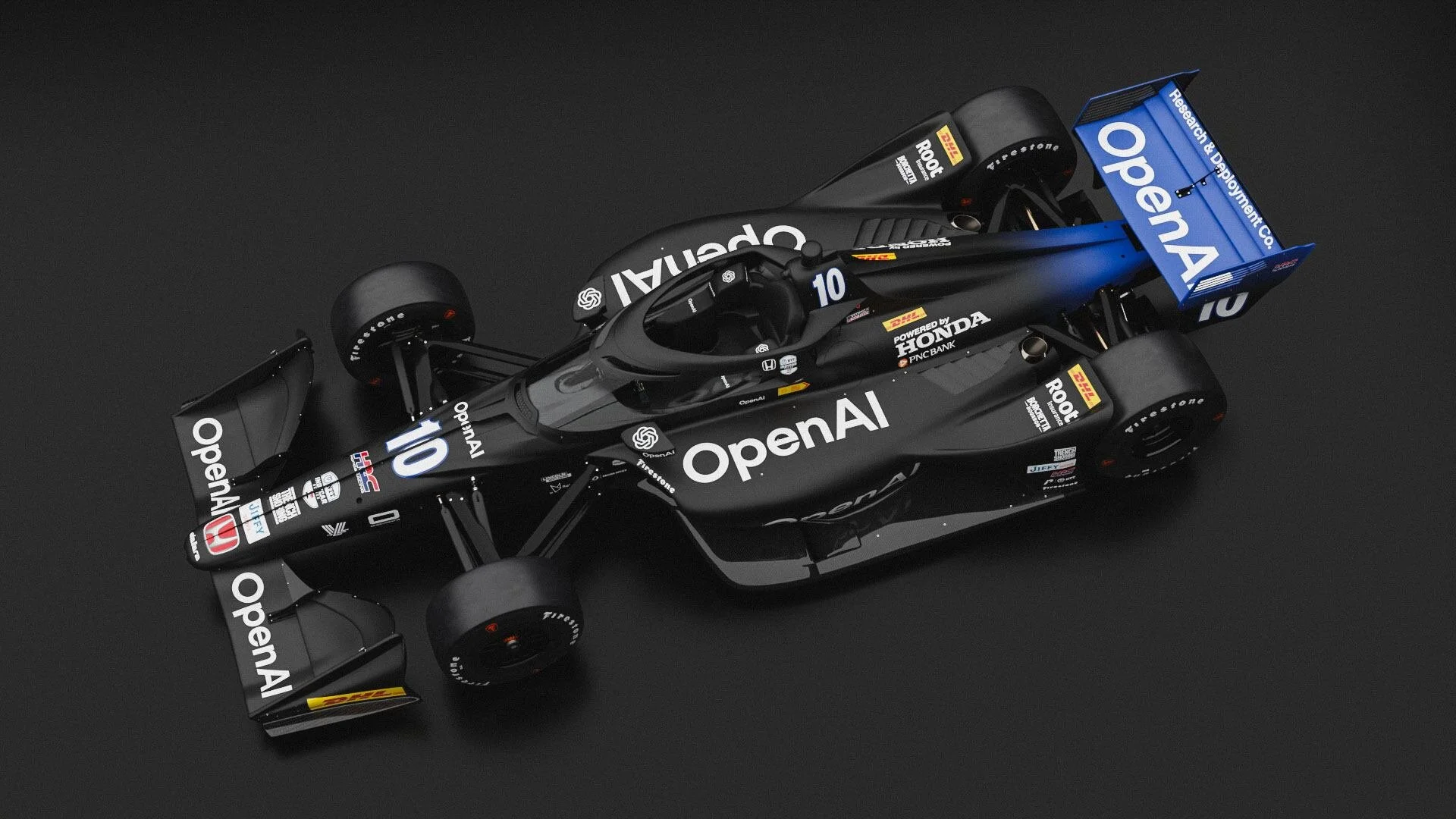
Chip Ganassi’s OpenAI IndyCar.
This is what makes Pittsburgh unique. Its unified culture—where sports, technology, business, and policy intersect—creates an environment where collaboration thrives. A championship-caliber organization requires both depth and cohesion, and Pittsburgh delivers that across every domain.
Powering the Future of Sport: Momentum Requires Action
Such immense momentum demanded action. Pittsburgh did not win 16 major professional championships by being complacent.
Success only fueled a deeper hunger—the more dominant the city became, the more it pushed forward.
That same mentality is now being applied to AI. That is why the AI Strike Team teamed up with Carnegie Mellon University and the Pittsburgh Steelers.
Powering the Future of Sport: A Draft Week Showcase was an invitation-only event that brought together global investors, AI founders, CEOs, civic leaders, and sports leaders during NFL Draft Week for a day of engaging discussions, live demonstrations, and industry innovations highlighting AI’s extraordinary potential to transform the future of sports.Pittsburgh’s full-stack advantage was on full display. The message to the nation was clear: Pittsburgh is open for business.
Forge to Field AI Pitch Competition
Emerging AI companies from across the nation pitched their scale-ready innovations to a panel of high-profile judges, including Mark Cuban and Ed Stack. Finalists competed for a share of a $1.75 million prize pool, including up to $1 million in AWS compute credits.
Powered by the AI Strike Team and Carnegie Mellon University Swartz Center for Entrepreneurship, the competition connected founders to one of the most dominant AI ecosystems in the world.
Backed by Amazon Web Services, participants gained access to a platform that has distributed over $8 billion to more than 350,000 startups through AWS Activate since 2013. Today, 80% of the world’s AI unicorns run on AWS—highlighting its role in scaling the next generation of AI companies.
Congratulations to all participants who took part in the competition:
ServeSense
This was more than an event—it was a signal. A signal that Pittsburgh is not just participating in the future of sport and AI, but defining it. As the eyes of the football world turned towards the Draft, so too will they turn toward a city that has always built what comes next. The same grit that forged steel, the same excellence that built champions, is now powering a new era of intelligence, innovation, and impact. The question is no longer what Pittsburgh can become—it’s whether you’re ready to be part of it.
